At AMSTAR Pumps, progress has never been limited to performance alone. While engineering reliable, high-quality pumping solutions remains at the core of what we do, we believe that true progress also means taking responsibility for how we manufacture, operate, and grow. As industries across the world face the challenge of climate change, we recognise the importance of contributing meaningfully rather than symbolically.
This belief has led us to initiate our Carbon Neutralisation Programme, a long-term commitment aimed at reducing our overall carbon footprint by 60% by the year 2029. This is not a short-term marketing promise, but a structured and measurable journey—driven by engineering discipline, operational efficiency, and sustainable thinking.
Why Carbon Neutralisation Matters to Us
Manufacturing, especially in heavy engineering sectors, inevitably consumes energy and resources. Pumps play a vital role in water management, agriculture, infrastructure, and industry—but the way they are produced matters just as much as how efficiently they operate.
For us, sustainability is not about compromise. It is about intelligent design, process optimisation, and responsible decision-making at every stage of production. By reducing emissions at the source rather than relying on offsets alone, we aim to build a manufacturing ecosystem that is both environmentally responsible and operationally efficient.
Our 2029 Goal: A 60% Reduction in Carbon Footprint
Our target is clear:
Reduce AMSTAR’s manufacturing and operational carbon footprint by 60% by 2029.
To achieve this, we have identified three key pillars that form the foundation of our carbon neutralisation strategy:
1. Integrated Manufacturing Under One Roof
2. Transition to Renewable and Natural Energy Sources
3. Sustainable Mobility Through Electric Vehicles
Each pillar is supported by detailed planning, phased implementation, and continuous performance monitoring.
1. Integrated Manufacturing: One Factory, One Vision
One of the most impactful steps in our sustainability journey is the consolidation of manufacturing activities into a single integrated factory setup.
Traditionally, pump manufacturing involves multiple facilities—separate foundries, component suppliers, machining units, and assembly locations. While functional, this approach increases transportation emissions, logistical inefficiencies, and energy consumption.
Our approach is different.
By bringing foundry operations, component manufacturing, machining, assembly, and testing into one unified facility, we significantly reduce:
● Inter-facility transportation
● Fuel consumption
● Packaging waste
● Carbon emissions associated with logistics
Beyond sustainability, this integration improves quality control, process visibility, and production efficiency. Every component is produced closer to its point of use, allowing tighter tolerances, faster feedback loops, and reduced material wastage.
In essence, integrated manufacturing is not just greener—it is smarter engineering.
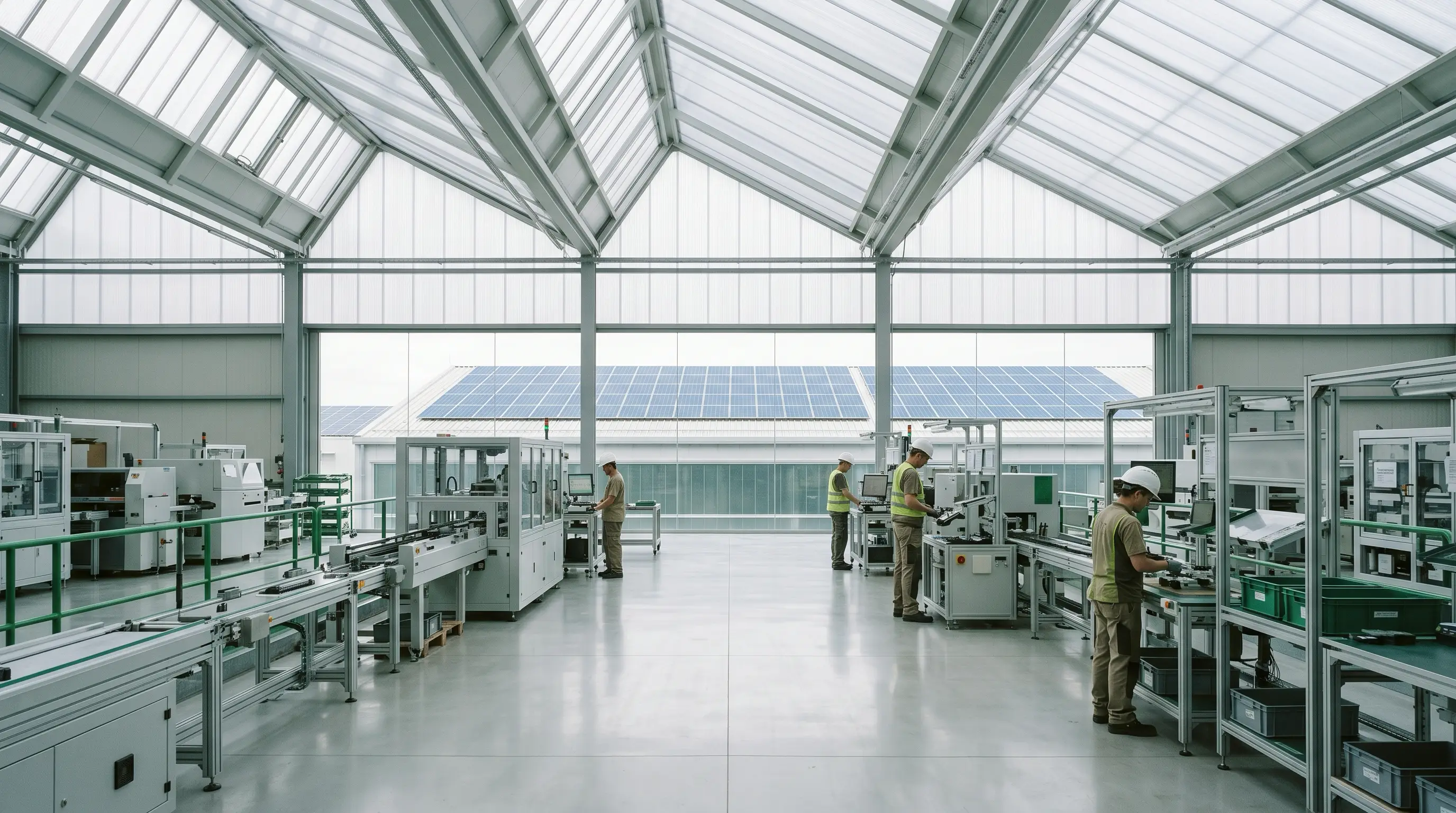
2. Powering Production with Natural Light and Solar Energy
Energy consumption is one of the largest contributors to industrial carbon emissions. Recognising this, we are redesigning our manufacturing spaces to maximise the use of natural light and renewable energy sources.
Natural Light Optimisation
Our new and upgraded facilities are being designed with:
● High-transparency roofing panels
● Skylights and open layouts
● Optimised workstation placement
This reduces dependence on artificial lighting during daytime operations, creating a healthier working environment while lowering electricity consumption.
Solar-Powered Equipment and Infrastructure
We are actively transitioning towards:
● Solar-powered lighting systems
● Solar-assisted machinery and utilities
● Renewable energy integration for non-critical loads
By harnessing solar energy, we reduce reliance on conventional power sources and move closer to a self-sustaining energy model. Over time, this transition will play a critical role in achieving our carbon reduction targets.
3. Sustainable Mobility: Driving Change with Electric Vehicles
Sustainability does not end at the factory gate. Transportation—both material movement and employee commuting—accounts for a significant portion of indirect emissions.
To address this, we are taking a two-fold approach:
Electric Vehicles for Company Operations
We are progressively introducing electric vehicles (EVs) into our internal logistics and company transport fleet. This shift reduces fuel consumption, lowers emissions, and supports cleaner mobility within and around our facilities.
Encouraging Employees to Go Electric
We believe sustainability works best when it becomes a shared responsibility. To support our employees in making greener choices, we are implementing:
● Free EV charging stations in our factory and office parking areas
● Incentives and awareness programmes promoting electric mobility
● Infrastructure that makes EV adoption convenient and practical
By removing barriers to adoption, we aim to create a workplace culture where sustainability is not enforced—but enabled.
Engineering Sustainability Into Everyday Decisions
What makes our carbon neutralisation programme effective is not a single initiative, but the way sustainability is embedded into everyday decision-making. From material selection and process planning to facility design and workforce engagement, every choice is evaluated through both performance and environmental impact lenses.
Importantly, we see sustainability as a continuous improvement process. Targets will evolve, technologies will advance, and our methods will adapt—but our commitment remains firm.
Looking Ahead: Responsible Growth, Built to Last
As AMSTAR Pumps continues to expand its product range and market presence, our responsibility grows alongside it. Customers, partners, and distributors increasingly value not only product performance, but also the values behind the brand.
Our journey toward carbon neutral manufacturing reflects our belief that quality engineering and environmental responsibility can—and must—go hand in hand.
By 2029, our goal is not just to reduce emissions, but to set an example of how thoughtful design, efficient manufacturing, and collective action can drive meaningful change in the engineering sector.
This is our commitment—to our customers, our people, and the future we are building together.